
Screenplay Pacing: Common Problems & Fixes
What to look when your script drags or skips
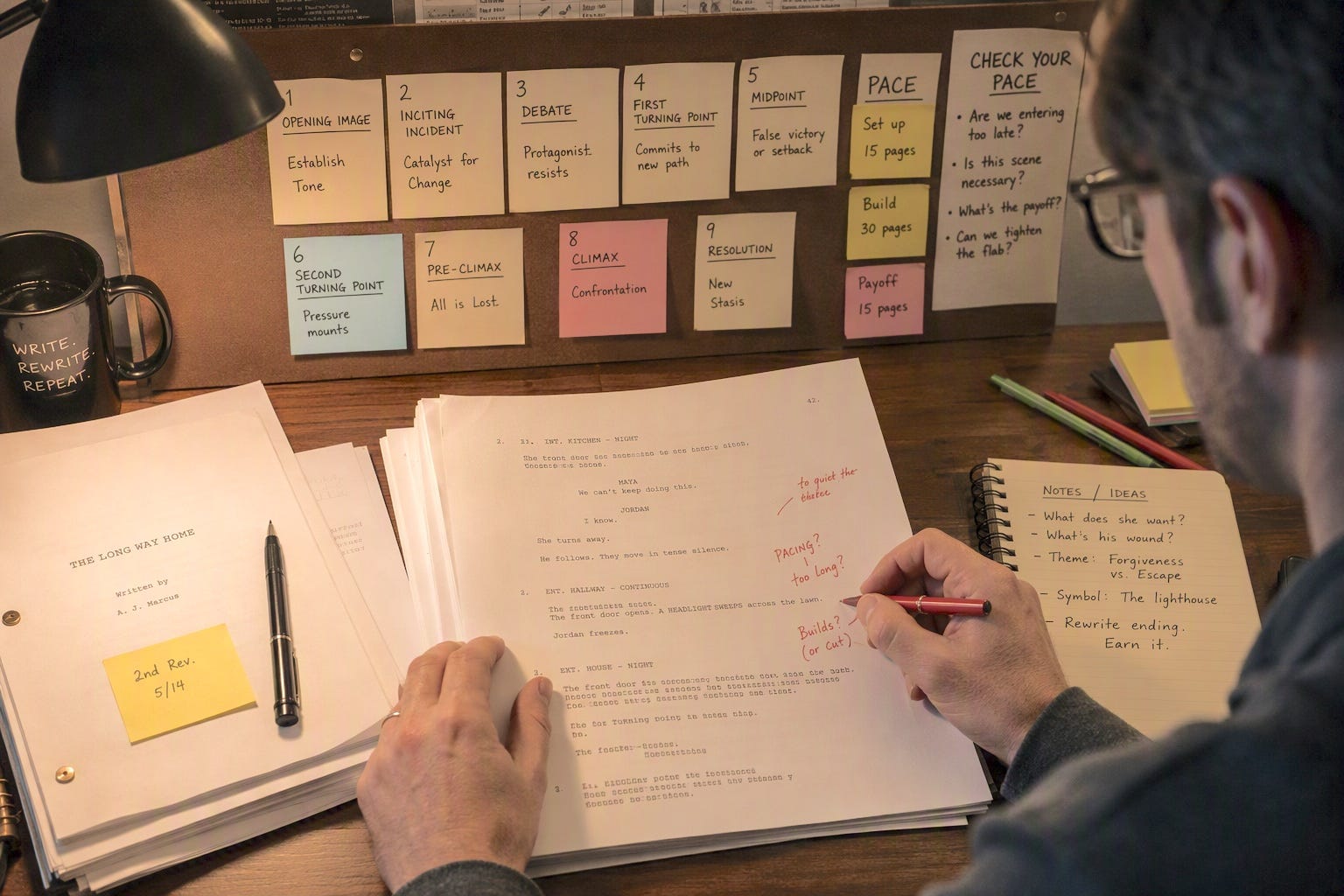
So your script has pacing problems? How to fix them.
Screenplay pacing is the speed, rhythm, and emotional momentum with which a story unfolds on the page and on screen. It is shaped by scene length, dialogue, action, transitions, plot reveals, character decisions, and the balance between tension and release. Effective pacing in screenplays keeps readers and viewers engaged by ensuring that every scene moves the story, character arc, or conflict forward. While fast pacing can create urgency and suspense, slower pacing can build atmosphere, deepen relationships, and allow important emotional moments to land.
Strong screenwriting does not mean every script must move quickly. It’s not always about the speed of the read. Instead, successful screenplay structure uses pacing that supports the story’s intended genre, tone, and audience expectations. A psychological thriller may deliberately slow down to create dread, while an action movie often relies on escalating set pieces and shorter scenes. Learning practical screenplay pacing techniques helps writers control when audiences feel anticipation, surprise, relief, or emotional impact.
Problems arise when a script has inconsistent genre conventions in screenplays. If a horror film suddenly treats its central threat like a comedy without a clear tonal purpose, or a romantic drama interrupts intimate character development with an unearned action sequence, the audience may become confused about what kind of experience the story is offering. This genre expectation mismatch screenplay problem can weaken suspense, reduce emotional investment, and make characters or plot turns feel unbelievable.
Inconsistent genre conventions can also damage tone, stakes, and narrative momentum. A mystery that reveals answers too early may lose its tension; an action script with long stretches of unrelated exposition may stall; and a comedy that introduces serious consequences without properly setting them up can feel emotionally uneven.
Knowing how to fix screenplay pacing and align genre expectations allows writers to create scripts that feel cohesive, engaging, and commercially readable.
Read more.